Once a Houston homeowner decides on a standby generator, the next decision is coverage. A whole-home setup runs every circuit in the house during an outage. An essential-circuit setup runs a chosen list — refrigerator, one AC, some lights and outlets, the furnace blower, the network closet. Both are legal under NEC Article 702. They lead to different generators, different transfer switches, and different install scopes.
Solivance Electric installs both. This post lays out how each works and how to pick.
Should a Houston home get a whole-home or essential-circuit generator?
A whole-home generator fits houses with two or more AC systems, electric appliances, or people who need the whole house working through a multi-day outage. An essential-circuit generator fits houses where a short list of circuits covers what matters. The essential-circuit option uses a smaller generator; the whole-home option avoids choosing.
How does a whole-home setup work?
A whole-home setup uses an automatic transfer switch rated for the full service, typically 200A. The switch sits between the meter and the main panel. When utility power drops, the switch moves the entire house to the generator. Every breaker in the panel stays live.
The generator does not have to be big enough to run everything at once. NEC 702 allows automatic load management, so the transfer switch can hold back large loads — a second AC, an electric dryer, a pool pump, an EV charger — until there is room. That is how a whole-home setup fits a reasonably sized generator.
A service-rated transfer switch mounted outside can also act as the outdoor emergency disconnect required by NEC 230.85 in the 2023 code, which simplifies the install on many houses.
How does an essential-circuit setup work?
An essential-circuit setup adds a subpanel next to the main panel. Solivance Electric moves the chosen circuits from the main panel into the subpanel. The transfer switch feeds that subpanel from either the utility or the generator. Everything left in the main panel goes dark during an outage.
A typical essential list in a Houston house:
- Refrigerator and a chest freezer
- One AC system, usually the one serving bedrooms
- Gas furnace blower and controls
- Kitchen outlets and the microwave
- A few lighting circuits
- Garage door opener
- Network equipment, a home office, medical devices
- Sump pump or well pump, where one exists
How do the two compare side by side?
| Whole-home | Essential-circuit | |
|---|---|---|
| Circuits covered | All of them | Selected circuits in a subpanel |
| Generator size | Larger, or right-sized with load management | Smaller |
| Transfer switch | Service-rated, full amperage | Smaller, feeds the subpanel |
| AC coverage | All systems, managed | Usually one system |
| Panel work | Minimal on a clean 200A service | Circuits moved to a new subpanel |
| During an outage | House runs normally | Only the listed circuits run |
| Fuel use | Higher at full load | Lower |
Where does the AC fit in?
In Houston, the AC decides almost everything. A house in Sugar Land with a 4-ton and a 3-ton system has two compressors that can start at the same time. If both are on the generator without load management, the generator has to handle both start-up surges. If only one is on an essential subpanel, the generator only sees one.
A soft starter on the compressor reduces the start-up surge and is a common add-on in either setup. Solivance Electric reads the condenser nameplates on the site walk before committing to a generator size. The full sizing method is in sizing a Briggs & Stratton standby generator in Houston.
Which houses usually go whole-home?
- Larger homes in the Memorial Villages, West U, and Bellaire with two or three AC systems.
- Homes with electric ranges, dryers, or water heaters that the owners do not want to give up for a week.
- Homes where people work from home and need offices, networks, and cooling all running.
- Owners who do not want to decide during an outage which circuit gets power.
Which houses usually go essential-circuit?
- Smaller homes in the Heights, Meyerland, or Missouri City where one AC system covers the main living space.
- Homes with gas appliances, where the electric load is already modest.
- Owners who want the generator mainly for food, cooling one area, and medical equipment.
- Homes where the main panel is full and a subpanel gives the install a clean starting point.
Does the electrical service affect the choice?
Yes. A whole-home setup on a 200A service with a clean panel is usually straightforward. On a 100A or 150A service, Solivance Electric may recommend a panel upgrade first, or an essential-circuit setup that avoids touching the main service. Obsolete panels such as Federal Pacific or Zinsco usually get replaced either way.
What about loads the house does not have yet?
The coverage choice should account for the next few years, not only the current house. The loads that most often get added after a generator goes in:
- A Level 2 EV charger. Typically a 40A to 60A circuit under NEC 625. On a whole-home setup, a load-shed module can hold the charger off while the generator is busy. On an essential-circuit setup, the charger usually stays off the subpanel. More on that circuit is on our EV charger page.
- A pool or spa. Pumps and heaters add both running load and start-up surge.
- An added AC system. A room addition or garage apartment with its own condenser.
- A switch from gas to electric appliances. An induction range or a heat pump water heater changes the load calculation.
An essential-circuit setup can take a few more circuits if the subpanel has spaces and the generator has headroom. A whole-home setup takes new loads more easily, as long as load management is wired for them. Solivance Electric asks about planned loads on the site walk for that reason.
What does the generator itself look like in each case?
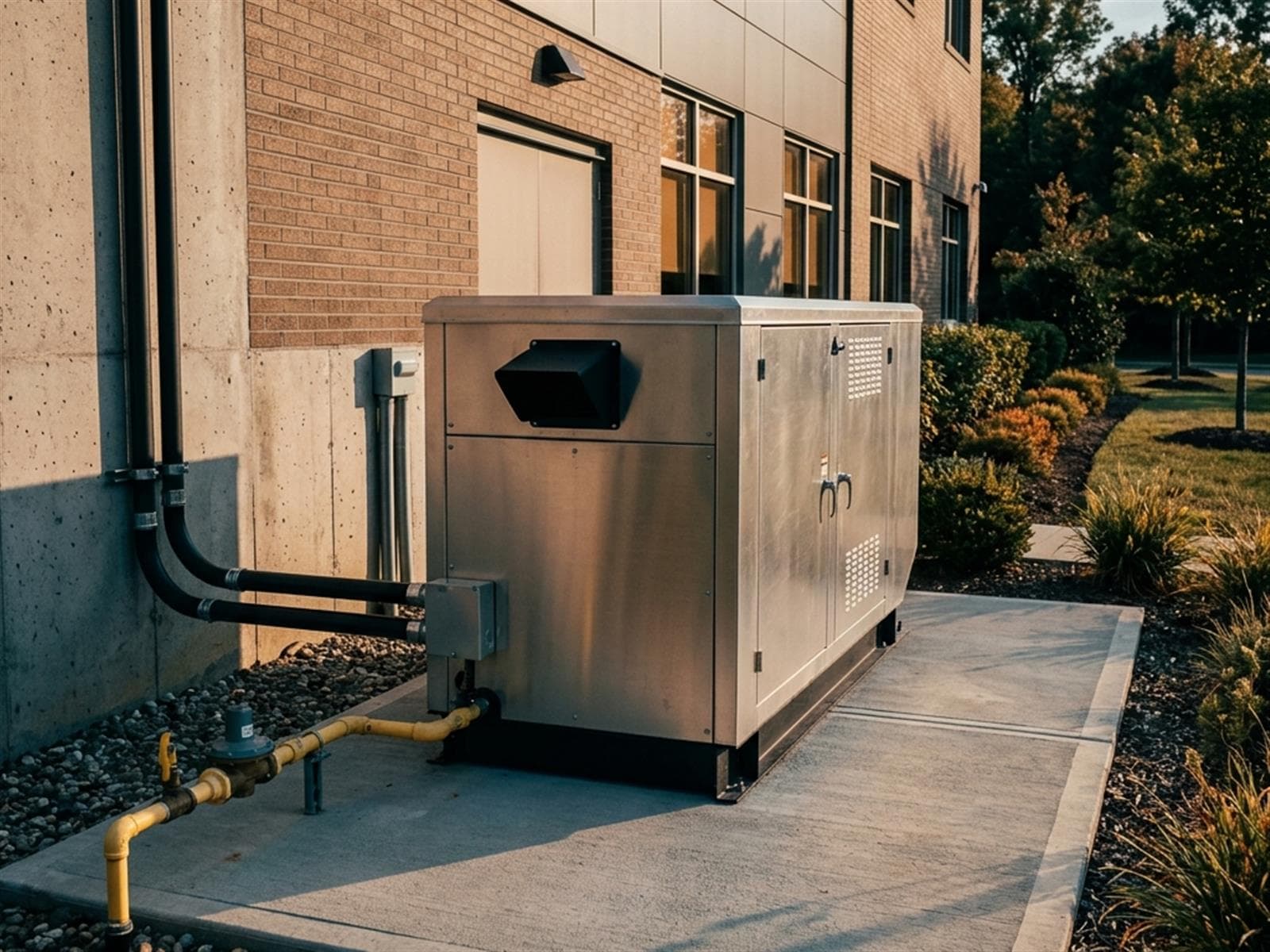
Both setups use the same kind of equipment: an air-cooled or liquid-cooled standby generator on a pad outside, running on natural gas or propane, with an automatic transfer switch. The difference is the size of the generator and the transfer switch. Solivance Electric is an authorized Briggs & Stratton dealer; the current lineup with pricing is on the generators page. Call or request a quote to buy the unit alone or with a full install.
How does the cost compare?
An essential-circuit setup generally uses a smaller generator and a smaller transfer switch, but it adds a subpanel and the labor to move circuits. A whole-home setup uses a larger generator or load management, but often less panel work. The only way to compare them is to quote both from the same site walk. Solivance Electric does that, with a fixed-fee number for each option. If paying over time helps, see how to finance a standby generator in Houston.
Get both options quoted
Solivance Electric walks the house, reads the AC nameplates, checks the service and the gas meter, and quotes whole-home and essential-circuit side by side. Request a site walk or call (832) 965-9964. More on the install is on our generator install page. Financing available through Synchrony — ask about monthly payment options. Subject to credit approval. See the financing page.